Which jobs trigger the rule and which fall under the minor repair threshold
The Environmental Protection Agency's Renovation, Repair, and Painting (RRP) Rule applies to most work that disturbs paint in homes, child care facilities, and schools built before 1978. If your crew is scraping, sanding, cutting, or demolishing painted surfaces in these buildings, you are likely covered by the rule. Lead-based paint was widespread before 1978. Even if you are not sure about the presence of lead, the EPA expects you to assume it is there unless a certified test proves otherwise.
Not every bit of paint disturbance triggers these requirements, though. The rule defines a "minor repair and maintenance" exemption. For interiors, if all work combined disturbs less than 6 square feet of painted surface per room, it is exempt. For exterior work, the threshold is 20 square feet per building. These limits are totals, not per task or per worker. Once you cross them, full RRP compliance is required. Projects like window replacement, door swaps, wall demolition, or major repainting almost always exceed the threshold.
The minor repair exemption only applies if you do not use prohibited practices like open-flame burning or high-speed sanding without HEPA vacuums. If you breach a painted surface using those methods, RRP applies no matter the disturbed area. Crews should measure and document paint disturbance before starting, to prove whether a job is minor or not if asked.
Keep reading: How to Write a Change Order That Holds Up When Payment Stalls
Firm certification versus certified renovator training
Complying with the RRP Rule starts with two separate approvals: one for the company and one for the workers. Any business, partnership, or individual contractor performing covered renovations must apply for EPA firm certification. This process involves submitting an application and fee, and agreeing to follow all RRP work practices. Firm certification is not a one-time event. It must be renewed on a regular schedule set by the EPA.
Firm certification alone is not enough. The EPA also requires that every covered job has a "certified renovator" directing the work. This person must complete an eight-hour training course provided by an EPA-accredited trainer. The course covers lead-safe work practices, containment, cleaning, and recordkeeping. The renovator's certificate is valid for five years before a refresher is needed. This certification travels with the individual, not the company.
On each regulated job, at least one certified renovator must be assigned, on site for key stages, and available by phone or in person the rest of the time. Other crew can perform tasks under the renovator's supervision, provided they have received on-the-job training about lead-safe methods. The certified renovator is responsible for instructing helpers, overseeing containment, and doing the final cleaning verification.
The Renovate Right pamphlet and the pre renovation notice
Before starting work that triggers the RRP Rule, the contractor must provide each "owner and occupant" of the home or child facility with the EPA's Renovate Right pamphlet. This pamphlet explains the dangers of lead paint, the basics of safe renovation, and their rights under the law. The distribution of this document is not optional, and there are strict timing and documentation requirements.
Owners must receive the pamphlet no later than seven days before work begins, or on the day the contract is signed, whichever is sooner. For tenant-occupied properties and child care facilities, every unit's occupant must receive a copy. There are also requirements for posting notices in common areas of multi-unit buildings. The EPA's pamphlet distribution form must be signed by the recipient, or the contractor must document mailing with a certificate of mailing and keep copies for their records.
Failing to provide and document this notification is one of the most common RRP violations cited by inspectors. A signed acknowledgment or proof of mailing protects your business in case of a compliance review.
Keep reading: Fixed Price, Cost Plus, or Not to Exceed: Picking a Remodel Contract
Containment, signage, and the work practices the rule prohibits
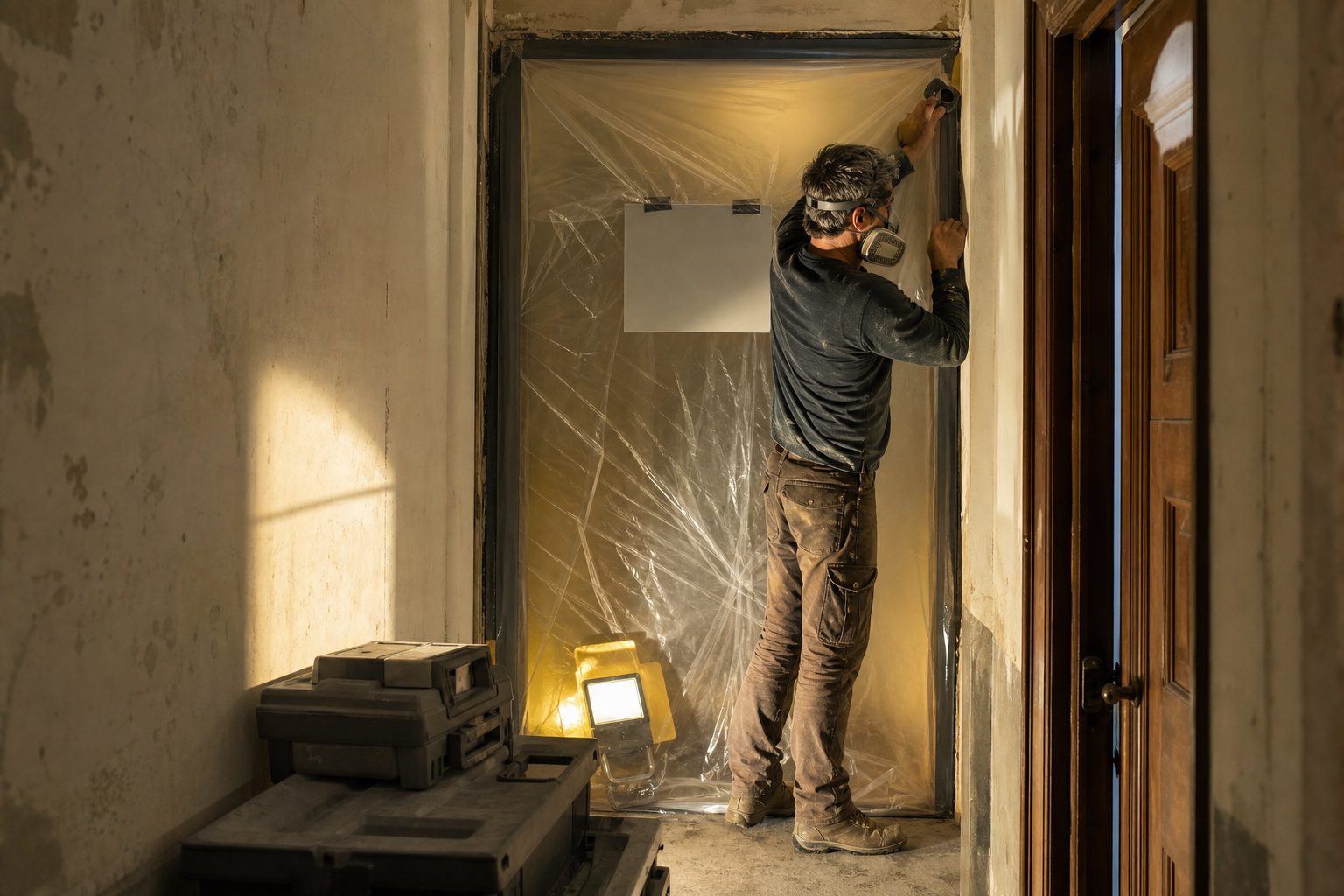
Once you are on site, the RRP Rule requires strict controls to prevent lead dust from spreading. You must establish a contained work area before any paint is disturbed. For interiors, this means taping down plastic sheeting on floors and furniture, sealing doorways and vents, and posting warning signs at every entrance. The signs must be clearly visible and say "Do Not Enter. Lead Work Area." Only trained workers can enter while the job is underway.
For exterior work, you must extend plastic sheeting at least ten feet from the building or enough to catch all debris. Close windows and doors within twenty feet of the work. If wind could carry dust further, extend containment as needed. All waste must be contained and disposed of according to local regulations.
The RRP Rule also bans several common work habits. You may not use open-flame burning, power sanders, or grinders without a HEPA vacuum, or paint strippers containing methylene chloride. Dry scraping and sanding are restricted to small areas. Heat guns above 1100 degrees Fahrenheit are also prohibited. These rules are designed to cut down airborne lead particles and protect both workers and residents.
Supervision is a must. The certified renovator must regularly check containment throughout the job, fix breaches at once, and document all actions taken. Lapses in containment or use of banned methods are among the costliest RRP violations, as they put health and safety at risk.
Cleaning verification and the wet and dry cloth procedure
Once the renovation is complete, you cannot simply sweep up and call it a day. The RRP Rule requires a step-by-step cleaning and verification process before turning the site back to the owner. The certified renovator is responsible for directing and documenting this phase.
Step 1: Thorough cleaning of the work area
Start by removing all debris and dust. Wet wiping is required for all hard surfaces. HEPA vacuums must be used on floors, window sills, and other surfaces where dust can collect. Plastic sheeting must be carefully folded inward and disposed of as construction waste. Skip bags or open bins are not allowed for this step.
Step 2: Cleaning verification using disposable cloths
After initial cleaning, the certified renovator conducts a visual inspection. If dust or debris remains, repeat cleaning until the area looks clean. Then, for non-porous surfaces (like vinyl, tile, metal), use a single wet disposable cleaning cloth to wipe a measured area, often 2 feet by 2 feet. For wood and other porous materials, a dry cloth is used. If the cloth has visible dust or residue, reclean and test again.
This verification is not a formal lab test. It is a field method meant to show the owner and the EPA that a reasonable visual and physical standard has been met. The certified renovator documents which areas were cleaned, how many times, and the results. Some states require additional dust wipe samples sent to a lab, but the EPA RRP rule itself does not.
See how ToolboxProof handles this for residential contracting and remodeling
The records you are required to keep for three years
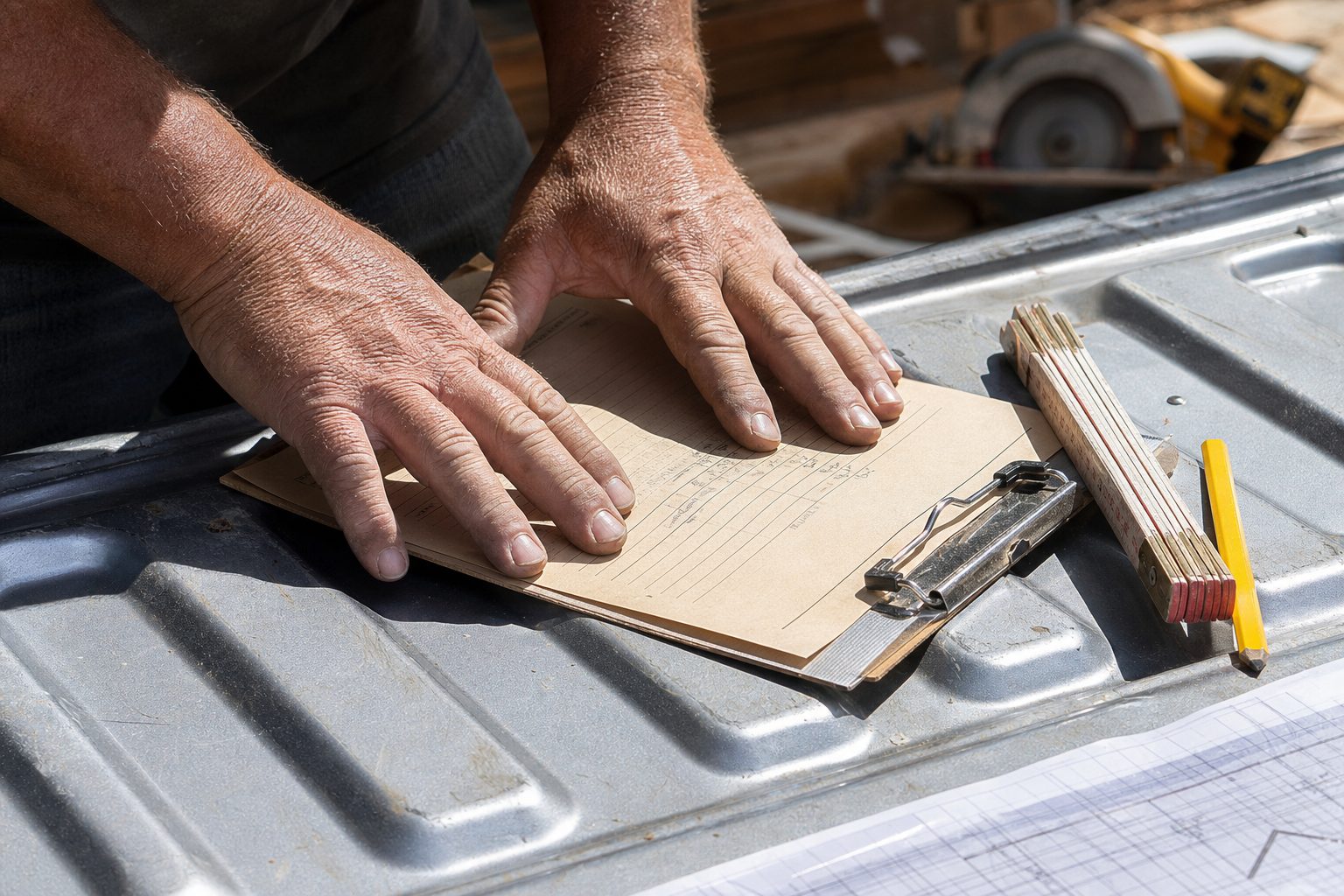
Recordkeeping is the heart of RRP compliance. The EPA requires firms to create and store a set of documents for every covered job, and these records must be kept for at least three years after completion. Failing to do so can trigger fines and, in some cases, suspension of certification.
At a minimum, records must include:
- Proof of firm certification and the certified renovator's training certificate
- Copy of the signed Renovate Right pamphlet acknowledgment or proof of mailing
- Written description of the work performed, including start and end dates
- Documentation of paint testing (if any) and results
- Containment setup and daily maintenance records
- Notes on prohibited practices and how they were avoided
- Cleaning verification sheets, including dates and results
- List of workers trained by the certified renovator and a record of their training
Records can be kept electronically or on paper, but they must be organized and available for inspection on request. Many contractors build a checklist or job file that follows each project from bid through closeout. It is also useful to keep photos of containment, signage, and cleaning steps as part of your documentation. If your state has a parallel rule, you may need to keep records even longer.
When jobs involve multiple sites or units, separate records are required for each area. The EPA audits not just the presence but the completeness of these files. A missing signature or photo can mean failing an audit even if the work was done safely.
What an EPA inspector asks to see, and the owner occupant myth
When the EPA inspects a job, they follow a structured process. Inspectors usually ask to see your firm's certification, the certified renovator's training, and the complete project file for the job in question. They look for clear evidence that the Renovate Right pamphlet was delivered, that proper containment was set up, and that cleaning and verification were performed and documented step by step. Photographs, signed forms, and checklists are the most effective proof. EPA inspectors do not give credit for "common sense" or "verbal instructions." Only written and photographic records count.
One persistent myth in the industry is the "owner occupant waiver." Some contractors believe that if the homeowner signs a form or agrees, the RRP Rule does not apply. This is almost never true. The only limited waiver allowed is for an owner who personally lives in the home, is doing the work themselves, and does not have children under six or pregnant women living in the house. Contractors and hired labor are not covered by this exemption, even if the homeowner requests it or claims to accept the risk.
EPA enforcement of the RRP Rule has increased in recent years, especially after complaints or reports of unsafe practices. Fines for missing documents, skipped pamphlet delivery, or improper containment are substantial. The safest approach is to assume every job in a pre-1978 home requires full documentation, unless you have written proof the minor repair exemption applies.
With detailed requirements and the burden of proof on the contractor, many firms now use jobsite tools that automate photo capture, track checklists, and organize reports for client signoff. This kind of recordkeeping system can make it easier to pass an audit and keep jobs moving, especially when multiple crews or sites are involved.